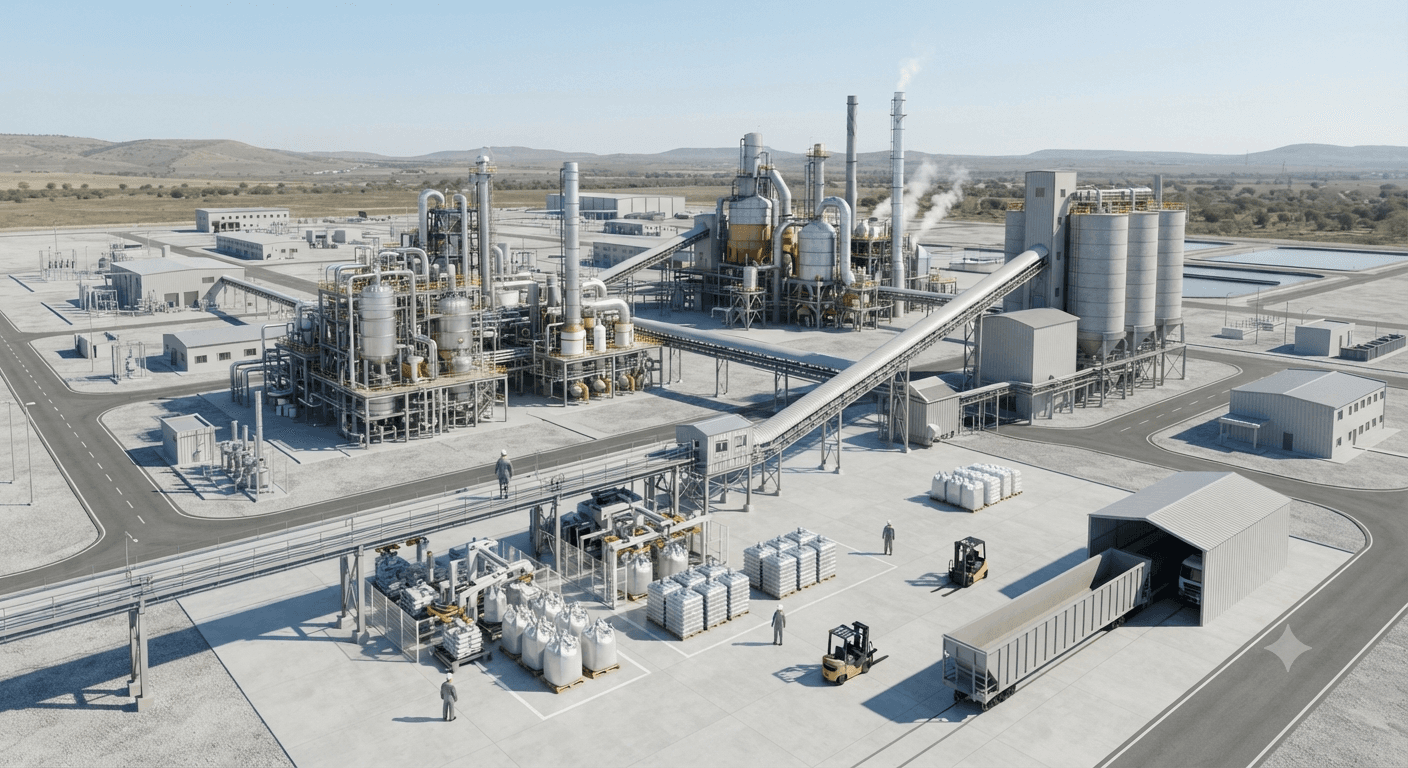
Few chemical manufacturing processes demonstrate the importance of co-production as clearly as the cumene process. Every day, producers around the world manufacture phenol and acetone through a single integrated production route, creating a market relationship that cannot be separated by changing customer demand. For procurement professionals, understanding this connection provides valuable insight into pricing behaviour, supply dynamics and long-term sourcing strategies.
Unlike chemicals that manufacturers can produce independently, phenol and acetone emerge together from the same chemical reaction. The cumene process produces phenol and acetone in a fixed molar ratio of approximately 1:0.62. This means changes in demand for one product inevitably influence the availability of the other.
How the Cumene Process Works
The cumene process begins with two important petrochemical feedstocks.
These are:
Benzene.
Propylene.
The first production stage involves the alkylation of benzene with propylene to produce cumene.
The process then continues through three major steps:
Cumene is oxidised to form cumene hydroperoxide.
The hydroperoxide undergoes acid-catalysed cleavage.
The reaction produces phenol and acetone simultaneously.
Because both products originate from the same intermediate, manufacturers cannot increase production of one without generating the other.
Why the Fixed Production Ratio Matters
The fixed production ratio is one of the defining commercial characteristics of the phenol-acetone market.
For every unit of phenol produced, approximately 0.62 units of acetone are also generated.
This has important implications for supply.
If demand for phenol increases significantly, producers naturally manufacture more acetone even if acetone demand remains unchanged.
Likewise, weak phenol demand can reduce acetone availability because lower operating rates affect both products simultaneously.
For procurement teams, this relationship explains why acetone prices sometimes move independently of direct demand from acetone-consuming industries.
Phenol Is a Foundation Chemical
Phenol serves as a critical raw material across numerous manufacturing sectors.
Its largest downstream applications include:
Phenolic resins.
Bisphenol A production.
Caprolactam manufacturing.
Phenolic resins are widely used in wood products, insulation materials and industrial moulding compounds.
Bisphenol A is an essential intermediate for:
Polycarbonate plastics.
Epoxy resins.
Caprolactam supports nylon production, linking phenol demand to engineering plastics and textile markets.
Because these industries often experience different economic cycles, phenol consumption reflects a broad industrial base.
Acetone Has Its Own Diverse Markets
Although acetone is produced alongside phenol, its applications differ substantially.
Major uses include:
Industrial solvents.
Methyl ethyl ketone (MEK) production.
Isopropyl alcohol (IPA) production.
Polymethyl methacrylate (PMMA) intermediates.
Acetone also supports pharmaceutical manufacturing, coatings, adhesives and specialty chemical production.
These markets frequently develop independently from phenol demand.
Why Supply and Demand Can Become Unbalanced
The fixed co-production relationship creates situations where one product enjoys strong demand while the other experiences weaker market conditions.
For example, if phenol demand rises because of increased polycarbonate or epoxy resin production, manufacturers respond by increasing operating rates.
However, higher phenol production also creates additional acetone.
If acetone-consuming industries cannot absorb this extra volume, the market may experience a surplus despite healthy phenol fundamentals.
This imbalance is a structural feature of the industry rather than a temporary production decision.
Secondary Markets Help Balance Acetone Supply
When acetone production exceeds direct market demand, secondary applications become increasingly important.
Additional volumes may find outlets in:
Solvent markets.
Chemical intermediates.
Downstream derivative production.
These secondary markets help absorb surplus material generated through strong phenol production.
Nevertheless, their ability to balance supply varies depending on broader industrial conditions.
Feedstocks Also Influence Production Economics
The cumene process depends on upstream petrochemical markets as well as downstream demand.
Important cost drivers include:
Benzene pricing.
Propylene availability.
Energy costs.
Plant operating rates.
Changes in feedstock markets affect the economics of phenol and acetone production simultaneously, adding another layer of complexity for procurement professionals.
Procurement Considerations for Industrial Buyers
Understanding the phenol-acetone relationship allows buyers to interpret market developments more accurately.
Useful questions include:
Is demand strengthening for phenol or acetone, or both?
Are operating rates changing because of downstream phenol demand?
Are acetone surpluses developing through increased phenol production?
How are benzene and propylene markets affecting manufacturing costs?
Which downstream industries currently drive consumption?
Looking beyond individual product demand provides a more complete picture of market conditions.
The Bottom Line for Procurement Teams
The cumene process illustrates how chemistry shapes commercial markets. By producing phenol and acetone together in a fixed ratio, the process creates a structural relationship that influences pricing, supply and operating decisions throughout the global chemical industry.
For procurement professionals, recognising this connection offers a stronger framework for evaluating supplier behaviour and anticipating market changes. Rather than analysing phenol or acetone independently, buyers should consider the entire production chain, from benzene and propylene feedstocks to downstream demand across resins, plastics, solvents and specialty chemicals. Ready to source phenol and acetone from verified global suppliers? Explore competitive offers on our platform today.
Methyl Ethyl Ketone CAS: 78-93-3