Polylactic acid (PLA) has emerged as one of the world's most commercially important biopolymers, offering an alternative to conventional petroleum-based plastics in packaging, food service products and selected medical applications. As sustainability targets become increasingly important across global supply chains, procurement professionals are evaluating PLA alongside established materials such as PET and polypropylene (PP). However, successful sourcing requires more than identifying a bio-based polymer. Buyers must understand its production process, performance characteristics and practical limitations.
Unlike traditional plastics derived from fossil feedstocks, PLA begins with agricultural raw materials. This difference shapes its supply chain, production economics and environmental profile while creating a distinct set of procurement considerations.
How PLA Is Produced
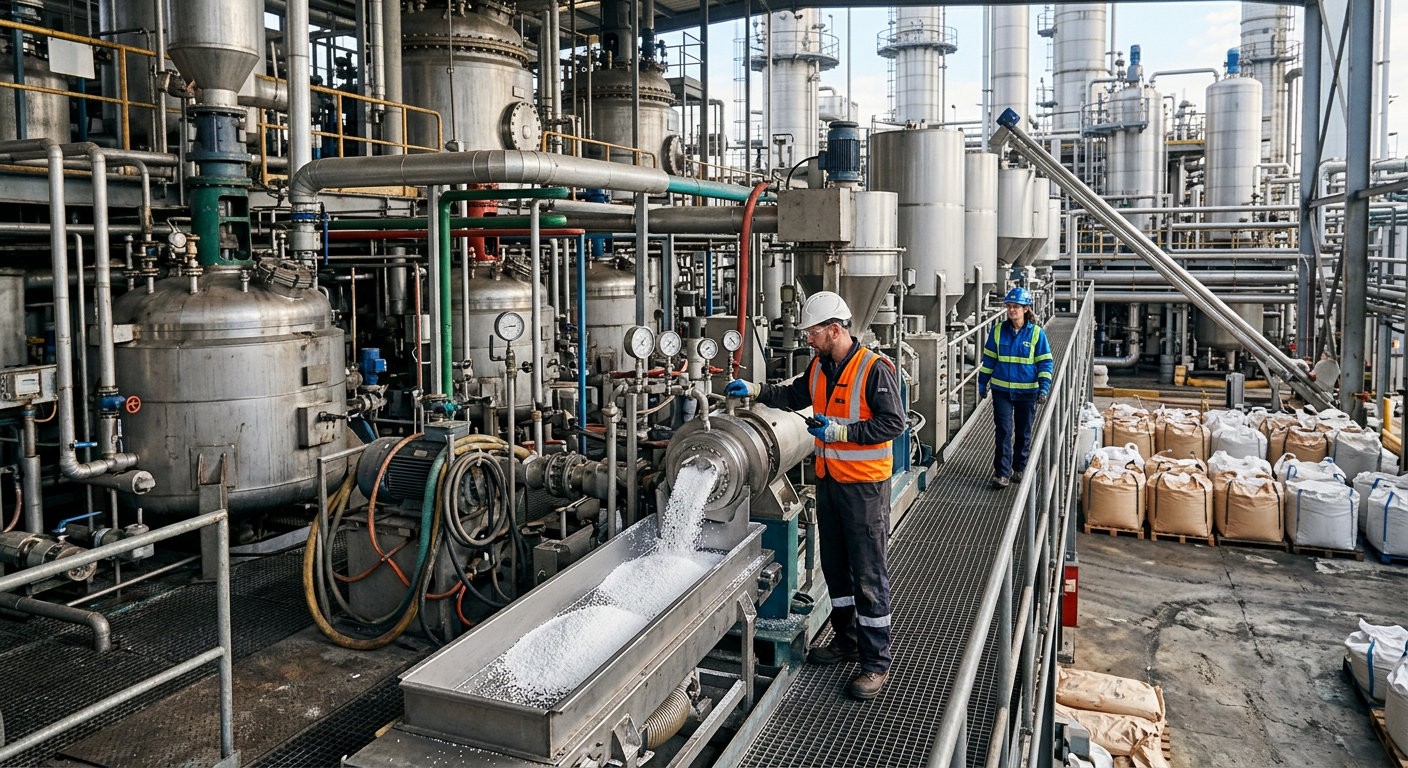
PLA manufacturing starts with lactic acid, which is produced through bacterial fermentation.
The fermentation process uses sugars obtained from renewable agricultural feedstocks such as:
Corn starch.
Sugarcane.
Microorganisms convert these sugars into lactic acid through controlled fermentation.
The lactic acid then undergoes additional processing to produce lactide, a cyclic intermediate that serves as the foundation for commercial PLA production.
The final manufacturing stage uses ring-opening polymerisation to convert lactide into high-molecular-weight polylactic acid resin suitable for industrial applications.
Agricultural Feedstocks Shape the Supply Chain
Unlike conventional polymers that depend primarily on petrochemical feedstocks, PLA production is closely linked to agricultural supply.
The main feedstock patterns include:
Corn as the primary source in the United States.
Sugarcane as an important feedstock across parts of the Asia-Pacific region.
This creates procurement dynamics that differ from those of traditional plastics.
Agricultural yields, crop availability and regional processing capacity can influence feedstock supply in ways that are distinct from crude oil or natural gas markets.
How PLA Compares with Conventional Plastics
PLA offers several attractive properties that have supported its commercial adoption.
These include:
High clarity.
Good stiffness.
Bio-based origin.
Suitability for food contact applications in many packaging formats.
However, PLA also differs from conventional polymers in several important ways.
Compared with PET and PP, PLA generally has lower heat resistance, making it less suitable for applications involving elevated temperatures.
Understanding these performance characteristics helps procurement teams select the right material for each product rather than treating PLA as a direct replacement for every conventional plastic.
Compostability Depends on Conditions
One of PLA's best-known characteristics is its potential compostability.
Commercial PLA products are designed to biodegrade under specific composting conditions, where temperature, moisture and microbial activity support controlled decomposition.
Recent research highlighted by C&EN has also explored new PLA technologies with the potential for home compostability, expanding interest in next-generation biopolymer development.
For procurement professionals, it is important to recognise that compostability depends on the material specification and the disposal environment rather than assuming identical performance across all PLA products.
Where PLA Is Used
PLA serves a growing range of commercial applications where its combination of clarity, processability and renewable origin provides value.
Major applications include:
Food packaging.
Disposable serviceware.
Medical devices.
Packaging remains the largest market, particularly where companies seek renewable material alternatives while maintaining attractive product appearance.
Medical applications benefit from PLA's specialised material properties in carefully designed healthcare products.
The Global PLA Producer Landscape
Commercial PLA production remains more concentrated than many commodity polymers.
Leading global producers include:
NatureWorks.
Total Corbion.
Corbion.
The NatureWorks and TTCL joint venture reflects continued investment in expanding global PLA manufacturing capacity.
Although production has grown steadily over recent years, the number of large-scale suppliers remains relatively limited compared with established polymers such as PET or PP.
This makes supplier evaluation and long-term commercial relationships particularly important for procurement teams.
PLA Versus PET and PP
Procurement professionals frequently compare PLA with PET and polypropylene during material selection.
Each polymer offers different strengths.
PLA provides:
Renewable agricultural feedstocks.
Excellent transparency.
Strong sustainability positioning.
PET offers:
Higher heat resistance.
Proven beverage packaging performance.
Extensive recycling infrastructure.
PP provides:
Excellent chemical resistance.
Higher service temperatures.
Broad industrial versatility.
Material selection should therefore reflect the technical requirements of the finished product rather than focusing on a single property.
Procurement Considerations for Sustainable Packaging
When evaluating PLA suppliers, procurement teams should consider both technical performance and supply chain resilience.
Important questions include:
Which agricultural feedstock supports production?
Does the resin meet the required processing specifications?
What compostability characteristics apply to the selected grade?
Is the supplier integrated into lactic acid production?
How diversified is the manufacturing network?
Evaluating these factors alongside pricing helps build a more resilient procurement strategy for sustainable packaging.
The Bottom Line for Procurement Teams
Polylactic acid has established itself as one of the leading commercial biopolymers by combining renewable agricultural feedstocks with proven performance across packaging, food service and selected medical applications. Its production route, beginning with fermented lactic acid and progressing through lactide to ring-opening polymerisation, distinguishes it from conventional petroleum-based plastics while creating unique supply chain characteristics.
For procurement professionals, successful PLA sourcing requires balancing sustainability objectives with technical performance. Understanding feedstock origins, material limitations, compostability requirements and supplier capabilities enables buyers to make informed decisions when comparing PLA with established polymers such as PET and polypropylene. Ready to source polylactic acid from verified global suppliers? Explore competitive offers on our platform today.
Lactic Acid (E270) CAS: 50-21-5