Overview
The plastic industry is one of the most important sectors in modern manufacturing due to its broad application across packaging, construction, automotive, electronics, healthcare, agriculture, and consumer goods. Plastics are valued for their light weight, versatility, processability, durability, and cost efficiency, making them essential materials in both high-volume commodity production and specialized industrial applications.
At the core of the industry are polymers, which are long-chain molecules engineered to provide specific physical and chemical properties. Depending on the polymer type and formulation, plastic materials can be rigid or flexible, transparent or opaque, impact-resistant, chemically resistant, or heat-tolerant. These characteristics make plastics highly adaptable to different product requirements and production technologies.
Modern plastic manufacturing also depends heavily on additives that improve processing, appearance, safety, and end-use performance. Stabilizers, plasticizers, fillers, pigments, flame retardants, and processing aids are often incorporated to help polymers meet specific industrial standards. As the market evolves, the plastic industry is also being reshaped by sustainability goals, recycling technologies, and demand for lower-impact material solutions.
Thermoplastics vs Thermosets
Aspect | Thermoplastics | Thermosets |
|---|---|---|
Heat Response | Can be melted and reprocessed | Cure permanently and cannot be remelted |
Processing | Injection molding, extrusion, blow molding | Compression molding, casting, lamination |
Recyclability | Generally easier to recycle | More difficult to recycle |
Typical Use | Packaging, automotive, household goods | Electrical parts, composites, high-heat applications |
Polymer Types and Functional Additives
The plastic industry is built around a diverse range of polymer families, each offering unique performance characteristics and commercial advantages. Common thermoplastics include polyethylene (PE), polypropylene (PP), polyvinyl chloride (PVC), polystyrene (PS), and polyethylene terephthalate (PET). Engineering plastics such as polycarbonate (PC), nylon, ABS, and POM are also widely used where higher mechanical strength, dimensional stability, or heat resistance is required.
In practical manufacturing, polymers are rarely used alone. Functional additives are often incorporated to improve processability, durability, safety, and product appearance. Plasticizers are used to increase flexibility, especially in PVC systems. Stabilizers help protect polymers from degradation caused by heat, UV light, or oxidation. Fillers can improve stiffness, reduce cost, or alter surface properties, while pigments provide color and visual consistency.
Other additives such as flame retardants, impact modifiers, anti-blocking agents, slip agents, and anti-static materials are selected based on the final application and processing requirements. The ability to tailor polymer performance through additives is one of the main reasons plastics remain highly adaptable across industries.
Main Polymer and Additive Groups
Group | Main Function | Typical Applications |
|---|---|---|
Commodity Polymers | Provide cost-effective, versatile base materials | Packaging, consumer goods, containers |
Engineering Plastics | Deliver higher strength and thermal performance | Automotive, electronics, industrial components |
Plasticizers | Increase flexibility and softness | Flexible PVC, cables, films |
Stabilizers | Improve resistance to heat, light, and oxidation | Outdoor products, durable goods, piping |
Fillers and Pigments | Adjust cost, stiffness, color, and appearance | Construction materials, molded parts, household products |
Choosing the right polymer-additive combination is essential for balancing performance, processing efficiency, regulatory compliance, and overall commercial value.
Plastic Production and Processing
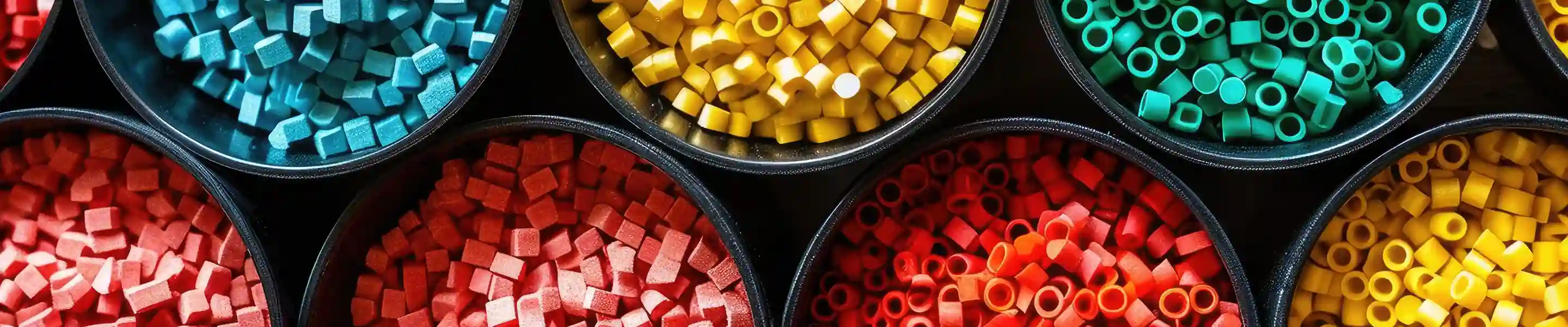
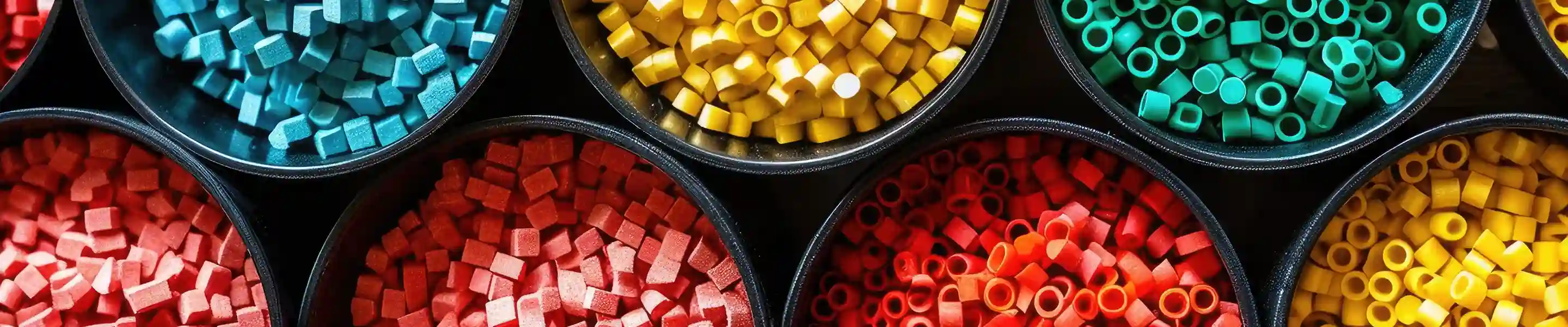
The plastic industry includes both polymer production and downstream conversion processes. Polymer production begins with the chemical transformation of monomers into long-chain molecular structures through polymerization. This may include addition polymerization or condensation polymerization, depending on the material type. Once the polymer resin is produced, it is typically supplied in pellet, powder, or granule form for further processing.
Downstream plastic processing converts these raw materials into finished products through techniques such as extrusion, injection molding, blow molding, thermoforming, and rotational molding. Each process is selected based on the product design, material behavior, production scale, and end-use requirements. For example, extrusion is widely used for films, sheets, and pipes, while injection molding is commonly used for precision parts and consumer goods.
Compounding is another important stage in plastic manufacturing. In this step, polymers are blended with additives, fillers, reinforcements, and colorants to create a formulation with specific performance properties. Quality control is critical throughout production to ensure consistency in melt flow, mechanical strength, dimensional stability, and visual appearance.
General Production Flow
Monomer preparation and polymerization
Resin pelletizing or raw material preparation
Compounding with additives and fillers
Conversion through molding, extrusion, or forming processes
Cooling, finishing, inspection, and packaging
Efficient process control helps reduce defects, improve material utilization, and ensure the final product meets both technical and commercial expectations.
Applications of Plastics
Plastics are used in nearly every major manufacturing sector due to their flexibility in design, processing, and performance. In packaging, they are valued for light weight, barrier properties, printability, and cost efficiency. Films, bottles, containers, and flexible packaging formats all rely heavily on plastic materials for product protection and logistics efficiency.
In construction, plastics are used in pipes, insulation, window profiles, flooring systems, membranes, and cable protection. Their corrosion resistance, processability, and durability make them highly suitable for long-life infrastructure and building applications. In automotive and transportation, plastics support lightweighting strategies, helping reduce vehicle weight while maintaining strength and design flexibility.
Other major sectors include electronics, healthcare, agriculture, and consumer goods. Plastics are used in housings, connectors, medical disposables, irrigation systems, appliances, and countless molded components. This broad application base reflects the material versatility that continues to make plastics commercially indispensable.
Key Application Segments
Industry | Main Use | Key Requirement |
|---|---|---|
Packaging | Films, bottles, containers, flexible packs | Light weight and barrier performance |
Construction | Pipes, profiles, insulation, membranes | Durability and weather resistance |
Automotive | Interior parts, housings, trims | Strength-to-weight efficiency |
Electronics | Casings, connectors, insulation components | Dimensional and thermal stability |
Healthcare | Medical disposables and packaging | Purity, consistency, and processability |
Safety, Handling and Storage
Proper handling and storage are important throughout the plastic supply chain, from resin production and compounding to final conversion. Raw polymers and additives should be stored in clean, dry environments to prevent contamination, moisture absorption, and degradation. This is especially important for hygroscopic materials such as nylon and PET, which may require controlled drying before processing.
During processing, operators must manage heat, pressure, fumes, and dust depending on the material and equipment involved. Some additives and fine powders may require additional dust control or ventilation measures. Excessive processing temperatures can lead to polymer degradation, discoloration, and reduced mechanical performance, so process conditions must be carefully controlled.
Finished plastic products should also be protected from unnecessary UV exposure, excessive heat, and mechanical damage during storage and transportation, particularly when appearance or dimensional stability is critical to the end use.
General Handling Principles
Store resins and additives in clean, dry, and well-managed conditions
Protect moisture-sensitive polymers before processing
Control temperature and ventilation during melting and molding operations
Follow Safety Data Sheet (SDS) guidance for additives and specialty materials
Storage Overview
Material Type | Recommended Storage Conditions | Main Consideration |
|---|---|---|
Polymer Resins | Dry, clean area with sealed packaging | Prevent contamination and moisture uptake |
Additives and Fillers | Controlled storage with proper labeling | Maintain stability and safe handling |
Finished Plastic Products | Protected from UV, heat, and mechanical stress | Preserve appearance and performance |
Sustainability and Innovations
The plastic industry is facing increasing pressure to improve circularity, reduce waste, and develop more sustainable material solutions. One of the most significant areas of change is the growth of recycling systems, including mechanical recycling, chemical recycling, and design-for-recyclability strategies. These efforts aim to keep valuable polymer materials in use for longer while reducing dependence on virgin feedstocks.
At the same time, manufacturers are investing in lightweight packaging, mono-material structures, recycled-content formulations, and improved waste collection systems. Bio-based polymers and biodegradable materials are also attracting attention, although their commercial suitability depends heavily on application, infrastructure, and regulatory context.
Innovation is not limited to materials alone. Processing technologies are also evolving to reduce energy use, improve recovery rates, and increase the consistency of recycled outputs. As sustainability becomes more central to customer expectations and regulatory frameworks, the future of the plastic industry will increasingly depend on how effectively companies combine performance, cost efficiency, and circular material strategies.