Explore our network of country and industry based websites to access localized information, product offerings, and business services across our group.
Log in to start sending quotation requests for any product.
Don't have an account? Sign Up Here
Home Reusable Linear Low Density Polyethylene in Modern Applications
Trade Insights | Applications and Buyers | 25 September 2025
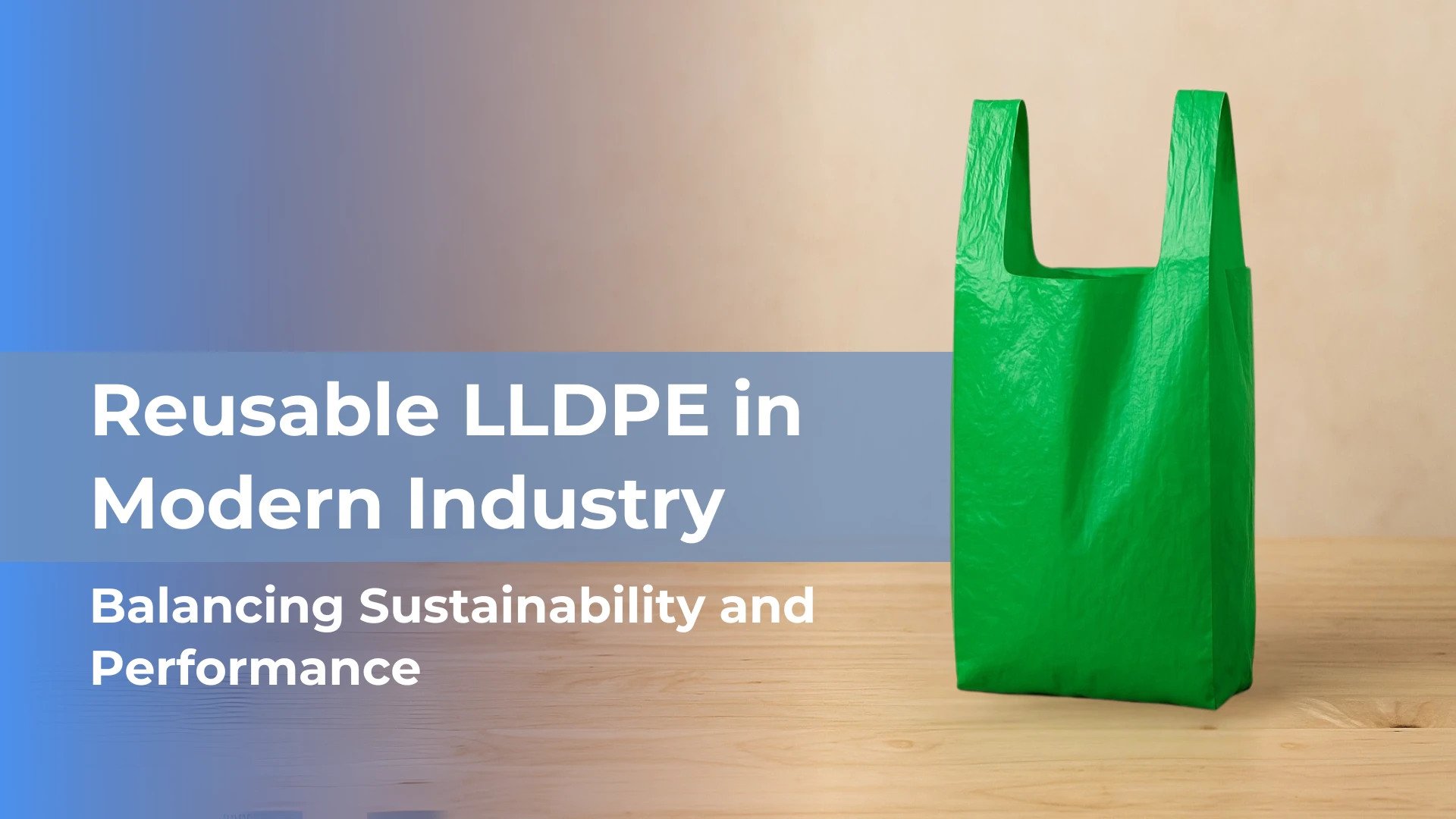
Introduction: LLDPE and the Move Toward Reusability
What Makes LLDPE Different from Other Polyethylenes
Key Applications of Reusable LLDPE
Packaging and Wrapping Films
Construction and Infrastructure
Agriculture and Greenhouses
Industrial Containers and Liners
Advantages of Choosing Reusable LLDPE
Market Drivers and Sustainability Trends
Challenges in Scaling Reusable LLDPE
Outlook for Global Industries
Conclusion
Plastic materials remain critical to industries worldwide, but sustainability pressures are reshaping demand. Among the versatile polymers, Linear Low Density Polyethylene (LLDPE) stands out for its strength, flexibility, and adaptability. When designed for reuse, LLDPE reduces waste, lowers costs, and helps companies align with circular economy goals.
LLDPE is produced through copolymerization of ethylene with alpha-olefins, giving it:
Higher tensile strength than LDPE.
Improved puncture resistance, ideal for films and wraps.
Flexibility and toughness, allowing thinner films with equal or better performance.
Unlike HDPE, which is rigid, or LDPE, which is softer, LLDPE balances durability with reusability — making it popular across industries.
Reusable LLDPE films are widely used in pallet stretch wraps and reusable bags. Their durability allows multiple uses, cutting packaging waste significantly.
In construction, LLDPE is found in geomembranes, vapor barriers, and protective sheeting. Reusable variants reduce costs for large projects.
LLDPE films regulate temperature and moisture in greenhouses. By improving UV stability, reusable sheets last multiple seasons.
Reusable LLDPE is molded into drums, containers, and liners that withstand repeated use in chemical, food, and pharmaceutical industries.
Sustainability: Extends product lifespan, reducing plastic waste.
Cost-efficiency: Multiple-use cycles lower replacement needs.
Lightweight strength: Easier handling and reduced logistics costs.
Recyclability: After its reusable life, LLDPE can still be recycled.
Circular Economy Policies: Governments encourage reusable and recyclable plastics.
Consumer Demand: Businesses seek eco-friendly packaging and products.
Industrial Shifts: Manufacturing sectors embrace durable, lightweight polymers to cut costs and emissions.
External source: UNEP – Plastic Pollution and Sustainability
Contamination risks in food-contact applications.
Higher upfront cost for reusable-grade LLDPE products.
Infrastructure gaps in recycling and collection systems.
The reusable LLDPE market is projected to grow steadily at 5–6% CAGR through 2030 (Grand View Research), driven by packaging, construction, and agricultural demand. Asia-Pacific remains the largest consumer, while Europe leads regulatory-driven adoption.
Reusable LLDPE represents a balance between industrial performance and environmental responsibility. From packaging films to construction membranes and agricultural covers, its versatility ensures a long product life and reduced environmental footprint.
For manufacturers and buyers, investing in reusable LLDPE means aligning with sustainability trends while maintaining product reliability and efficiency.
Learn more about our LLDPE product, Technical Documents, and more at PlastradeAsia.
We're committed to your privacy. Tradeasia uses the information you provide to us to contact you about our relevant content, products, and services. For more information, check out our privacy policy.


 English
 Indonesian
 简体字
简体字
 العربية
 Español
 Français
 Português
 日本語
日本語
 한국어
한국어
 Tiếng Việt