1. Introduction
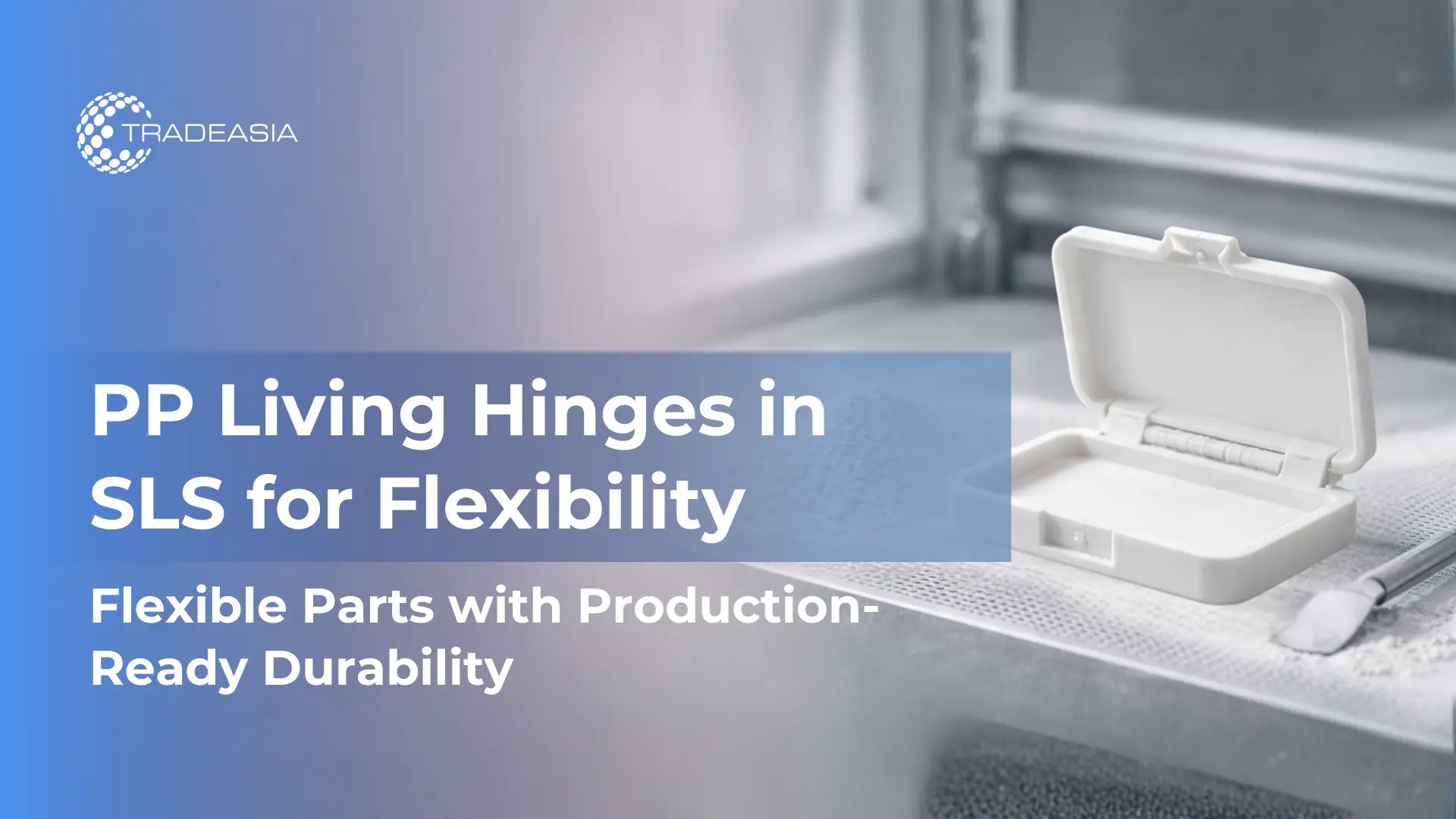
Living hinges are one of the most demanding “simple” features in plastics: they look like a thin bend line, but in real use they must survive thousands of cycles without cracking. Traditionally, injection-molded polypropylene is the gold standard for hinges because it combines flexibility with strong fatigue resistance. Now that SLS in plastic industry applications are shifting from prototyping to functional production, manufacturers are asking a practical question: can SLS deliver true living hinges and flexible parts at scale?
Selective Laser Sintering (SLS) is a powder-bed fusion process, so performance depends on polymer powder behavior (flowability, melting window, and crystallization control) as much as it depends on design. The shift toward production-ready SLS materials has accelerated interest in polypropylene powders because PP can unlock flexible mechanisms, snap fits, and hinge-like geometries that are difficult to achieve reliably with more rigid SLS polymers.
Industry coverage shows how PP powders are evolving specifically to address long-standing SLS constraints such as shrinkage control and part consistency—making PP increasingly relevant for functional end-use components rather than just prototypes.
2. Why Living Hinges Need a Different Polymer Mindset
A living hinge is not just a thin section—it is a fatigue-critical element. Polymers fail differently under repeated bending than under static load: you need a material that resists crack initiation, resists stress whitening, and maintains ductility over time. Polypropylene’s semi-crystalline structure, combined with its chain mobility characteristics, is one reason it has historically outperformed many plastics in hinge fatigue life.
In SLS, the hinge challenge becomes even more specific: printed parts can show anisotropy (layer-to-layer bonding differences), which can concentrate stress at the hinge line if the design is not optimized. PP’s ductility helps “forgive” some of these manufacturing realities, allowing flexible zones to bend rather than fracture—provided the process window is controlled.
Peer-reviewed research from Science Direct on polypropylene-based additive manufacturing materials and mechanical behavior supports the idea that PP can be engineered for improved functional performance in powder-bed processes (including better ductility in suitable conditions).
3. PP in SLS: What Makes It Work (and What to Control)
PP can deliver excellent flexible-part performance, but it is also known to be more challenging than PA12 in SLS because it is semi-crystalline and can warp if thermal management is inconsistent. That means success depends on powder quality, preheat control, scan strategy, and cooling profile. In practical terms: PP’s advantage (crystallinity-driven toughness) is also what makes processing discipline non-negotiable.
A key technical goal is keeping the build environment within a stable thermal window so the part cools uniformly and residual stresses are minimized. If the temperature gradient is too steep, thin hinge features may curl, distort, or develop internal stress that reduces hinge life. This is why PP SLS production is typically paired with robust process control and powder handling best practices.
Technical documents and application notes on PP in SLS emphasize the importance of powder morphology, thermal properties, and controlled sintering parameters to achieve repeatable mechanical performance (Source: Netsheipasam Document).
4. Designing Flexible Parts in PP SLS: Practical Guidelines
To engineer living-hinge-like behavior in PP SLS, start with geometry discipline: avoid sharp corners, use generous radii, and transition thickness smoothly into the hinge zone to reduce stress concentration. In SLS, where surface roughness and micro-voids can exist, notch sensitivity becomes a real fatigue risk—so design must actively “de-risk” crack initiation.
Second, treat hinge orientation as a core design requirement, not a detail. Place the hinge so bending forces align with the strongest direction of the printed microstructure when possible, and validate with bend-cycle testing. For production parts, prototype with the same print orientation and post-processing plan you’ll use in full-scale manufacturing—because hinge behavior is highly process-dependent.
Third, match your PP selection strategy to the functional target. Although SLS powders are specialized, many industrial teams begin material qualification and compounding studies by understanding PP homopolymer baselines (melt flow, stiffness vs. ductility tradeoffs, and consistency of supply). For procurement teams exploring PP homopolymer options relevant to processing and qualification workflows, a reference product listing is available here:
5. Sourcing Strategy: From PP Homopolymer to Industrial Production
From a commercial perspective, the SLS value story is strongest when SLS becomes a repeatable production method—not a one-off prototype tool. That requires stable upstream sourcing, consistent documentation, and predictable material behavior. This is where choosing the right pp homopolymer supplier matters: it reduces variability across qualification runs and supports a cleaner scale-up to production.
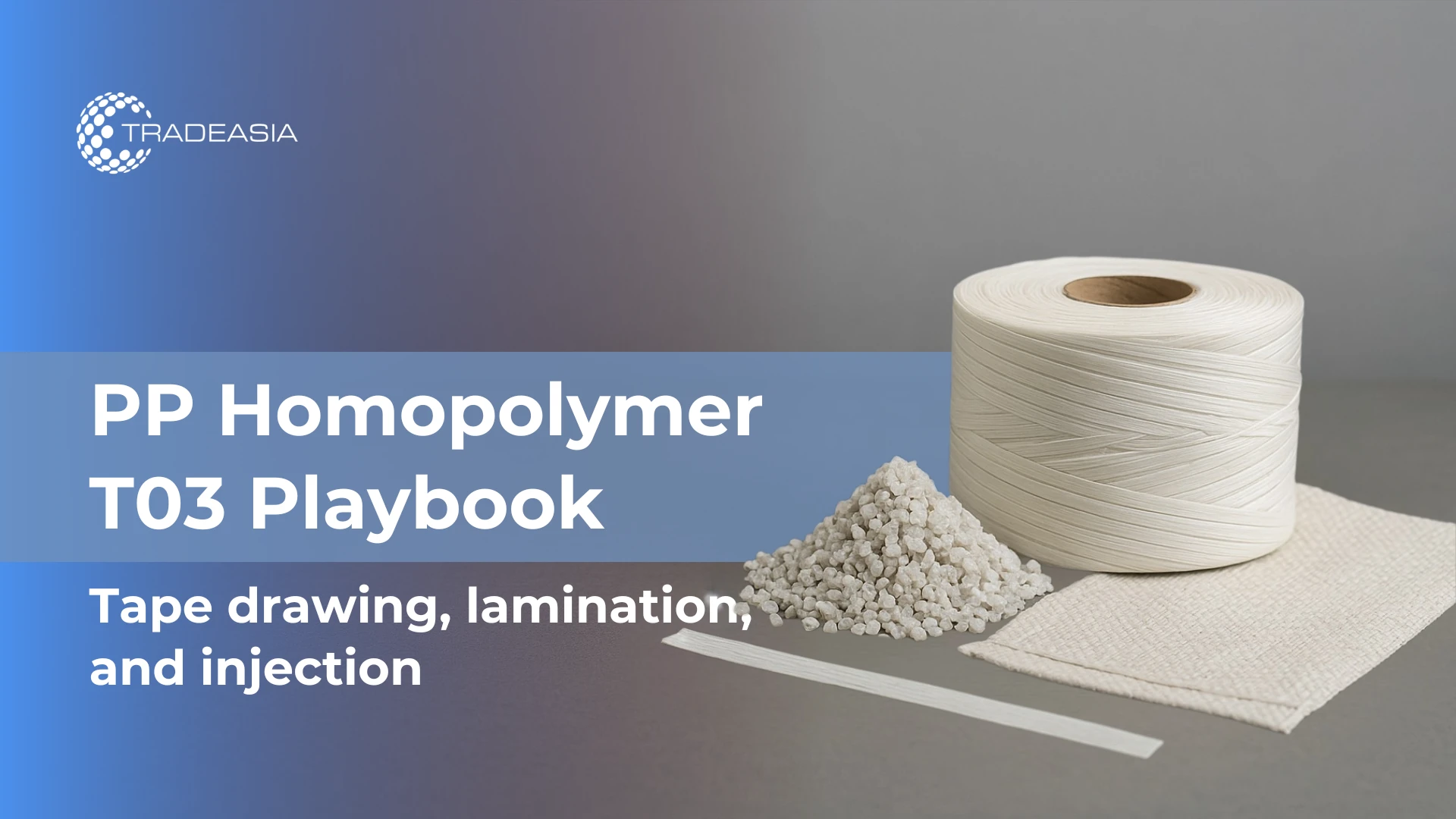
For many manufacturers, polypropylene procurement decisions are not limited to additive manufacturing alone. The polypropylene yarn market (used in textiles, woven bags, and industrial fabrics) also drives PP capacity planning and grade availability. If your operation spans multiple PP applications—yarn, injection, compounding, and exploratory 3D printing—aligning sourcing across those use cases can improve negotiating leverage and supply resilience. Relevant references for yarn-grade PP homopolymer include:
6. Conclusion
PP’s unique advantage in SLS comes down to what matters most for living hinges and flexible mechanisms: ductility, fatigue resistance, and functional performance under repeated bending. When powder/process controls are well-managed, PP can produce flexible parts that behave closer to molded components—unlocking lightweight designs, reduced assembly complexity, and more reliable snap-fit or hinge-based products.
If your team is planning PP-based material evaluation—whether for flexible SLS exploration or broader production programs—Plastradeasia can support resin sourcing and technical documentation needs through relevant PP homopolymer listings and resources. For commercial discussions, qualification support, or bulk supply inquiries, connect directly with the Plastradeasia team.
For detailed information about any PP Homopolymers on Plastradeasia:
For technical sheets, specifications, and supporting documents:
Any sourcing inquiries, RFQs, and commercial support to Plastradeasia?


Leave a Comment