1. Introduction
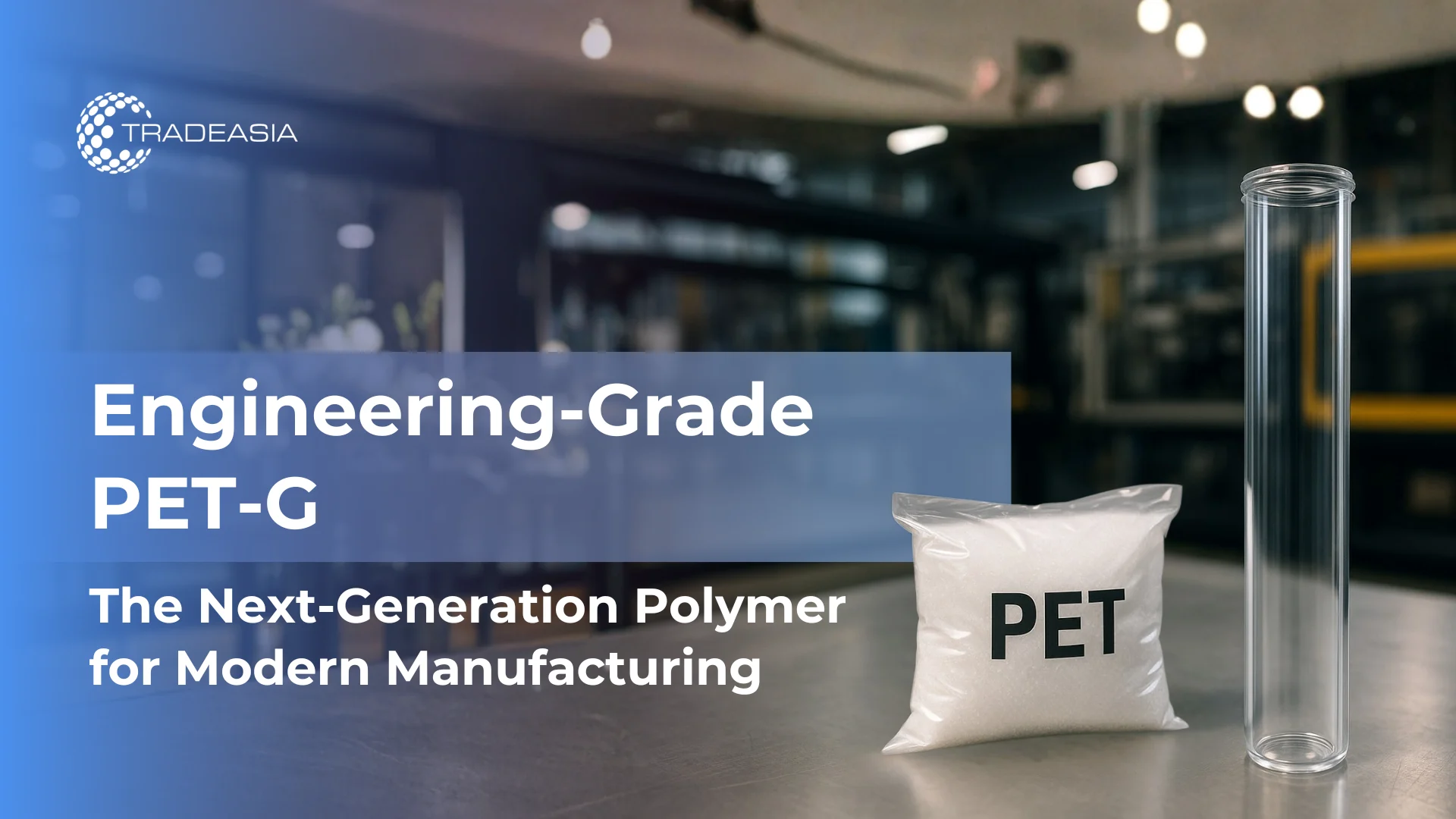
PET-G has become one of the most commercially significant engineered plastics in the global market due to its blend of clarity, toughness, and ease of processing. As a modified version of PET polyethylene terephthalate, PET-G is enhanced with glycol—specifically polyethylene glycol (PEG)—to deliver superior flexibility and impact resistance without compromising visual quality. These characteristics make PET-G an essential material across packaging, medical technology, retail displays, and industrial components.
The evolution of PET into PET-G can be traced to demand for plastics that can maintain clarity while enduring more complex manufacturing cycles. According to technical insights published on SpecialChem, PET’s foundational polymer structure is highly adaptable and can be modified to achieve specific industrial properties, including improved ductility and melt stability.
Beyond performance, PET-G’s market appeal is strengthened by its sustainability profile. Manufacturers increasingly prioritize recyclable materials, and PET-G offers compatibility with PET recycling streams. This alignment with circular manufacturing practices positions PET-G as a strategic choice for companies aiming to meet both performance demands and environmental objectives.
Industrial buyers and procurement teams sourcing PET and PET-G can review Plastradeasia’s verified material listings, including PET polyethylene terephthalate.
2. Understanding PET-G as a Modified Polymer
PET-G (polyethylene terephthalate glycol-modified) is created by introducing glycol into the polymer chain of PET during polymerization. This modification inhibits crystallization, giving PET-G an amorphous structure that is easier to process and shape. The result is a plastic with the transparency of PET but far greater flexibility, formability, and impact tolerance—key advantages for manufacturers handling high-volume production.
Polymer-science research, such as studies published on ScienceDirect, confirms that modifying agents in PET can alter chain mobility and reduce brittleness, leading to more resilient plastics ideal for thermoforming and extrusion. This scientific foundation explains why PET-G behaves differently from standard PET in industrial processing environments.
Another important distinction is PET-G’s stable performance during heating cycles. While PET tends to crystallize and may require pre-drying, PET-G remains stable in various thermal processes, reducing downtime and energy consumption. Manufacturers appreciate PET-G for its minimized production complexity and lower operational costs.
3. The Chemical Relationship Between PET and Polyethylene Glycol
Polyethylene glycol (PEG) plays a central role in transforming PET into PET-G. When PEG is added during polymerization, it disrupts the crystalline structure of PET, making the resulting polymer more elastic and less prone to stress cracking. This structural change yields PET-G’s signature properties: enhanced flexibility, increased toughness, and better processing behavior.
A study from the University Malaysia Pahang provides detailed evidence on how PEG alters PET during glycolysis, reducing crystallinity and improving mechanical performance—key factors that directly correlate with PET-G behavior.
This relationship also enhances PET-G’s chemical resistance. PEG-modified PET demonstrates higher stability when exposed to alcohols, cleaning agents, and mild acids, making PET-G especially suitable for regulated sectors such as pharmaceuticals and food packaging. Manufacturers benefit from consistent performance under aggressive sanitation conditions.
Tradeasia International supplies PEG grades widely used in polymer modification processes, including the production of PET-G:
4. Key Properties of PET-G Supported by Research
PET-G is best known for its optical clarity, which rivals materials like acrylic and polycarbonate. Its ability to maintain transparency even after deep thermoforming gives it an edge in consumer packaging and retail display manufacturing. The amorphous structure resulting from PEG modification ensures that PET-G experiences minimal haze or stress whitening.
Another defining property is its high impact resistance. PET-G outperforms PET in drop tests and maintains structural integrity under mechanical stress. Studies from polymer research sources, including ScienceDirect, have documented that glycol modification increases the elongation-at-break property, making PET-G significantly tougher than unmodified PET.
Chemical resistance adds another layer of value. PET-G withstands exposure to cleaning solutions, ethanol, and mild acidic environments, making it suitable for pharmaceutical and laboratory applications. Its chemical stability contributes to longer product life cycles and reduced material failures.
Lastly, PET-G excels in manufacturability. It supports quick cycle times, can be shaped into complex geometries, and does not require pre-drying before thermoforming—an operational advantage that reduces energy usage and increases output efficiency.
5. Advantages of PET-G for Large-Scale Manufacturing
For large-scale producers, PET-G offers meaningful economic advantages. Its forgiving processing profile reduces scrap rates, shortens heating cycles, and minimizes equipment maintenance. These factors contribute to improved throughput and lower per-unit production costs.
PET-G also provides excellent durability during downstream logistics. Its resistance to cracking, denting, and warping ensures that packaged goods and formed components arrive at their destinations intact. This benefits manufacturers engaged in consumer goods, electronics, and industrial equipment.
Regulatory compliance is another dimension favoring PET-G. It is widely accepted for food contact and medical applications due to its non-toxic chemistry. PET-G’s transparency further allows regulators and quality assurance teams to visually inspect products, which is particularly important in pharmaceuticals.
Technical documentation, TDS, and MSDS files for plastics and polymers can be downloaded from the Plastradeasia's Download Center to support engineering requirements.
6. Industrial Applications of PET-G Across Sectors
In the packaging industry, PET-G is frequently used for clamshells, blister packs, and transparent containers. Its clarity enhances product presentation, while its impact resistance ensures durability during transport and retail handling.
The medical and pharmaceutical sectors rely on PET-G for sterilizable trays, diagnostic equipment housings, and protective covers. Its chemical resistance and clarity make it ideal for regulated environments where hygiene and visibility are critical.
In advertising and retail, PET-G is valued for its easy printability and moldability, making it suitable for displays, signage, and point-of-sale units. Its impact resistance ensures that fixtures last longer even in high-traffic spaces.
Within industrial manufacturing, PET-G is chosen for machine guards, equipment windows, and protective panels. These applications require high clarity to monitor processes and high strength to ensure operator safety—both core strengths of PET-G.
7. Market Demand and Global Trends for PET-G
The global PET-G market continues to expand, driven by sustainability demands, consumer expectations for transparent packaging, and regulatory shifts away from less recyclable plastics. PET-G’s compatibility with PET recycling streams strengthens its appeal for companies transitioning to circular materials.
Scientific research from sources such as ScienceDirect and industry platforms like SpecialChem highlight significant innovation in PET modification and recycling technologies. These advancements are accelerating the adoption of PET-G as industries seek materials that balance performance, safety, and environmental responsibility.
The growth of thermoforming, extrusion, and 3D printing technology has also increased PET-G’s relevance across engineering and manufacturing. PET-G filaments are now preferred in additive manufacturing for parts requiring clarity, durability, and dimensional accuracy.
Stable global supply chains—supported by reliable PET polyethylene terephthalate suppliers and polyethylene glycol suppliers—ensure PET-G remains an accessible material for manufacturers across regions.
8. Conclusion
Manufacturers seeking reliable and consistent sources of PET-G, PET polyethylene terephthalate, or polyethylene glycol for industrial production can confidently explore the full product catalog available on Plastradeasia. The platform provides verified material specifications and trusted supplier listings, including high-quality PET polyethylene terephthalate accessible here: Plastradeasia's PET Product Page.
For companies requiring PEG modifiers used in PET-G formulation—whether for polymer enhancement, glycolysis, or compounding—Chemtradeasia offers dependable global supply options, including Polyethylene Glycol 99.5% Taiwan Origin and Polyethylene Glycol 200 China Origin.
Technical documents, regulatory data, application guidance, and product sheets are also readily available through the Plastradeasia's Download Center, ensuring that engineering teams and procurement specialists have the resources needed for informed material selection.
For bulk sourcing, contract supply programs, long-term procurement planning, or expert consultation on PET-G applications, companies are strongly encouraged to contact the Plastradeasia commercial team through the official Contact Us page.

Leave a Comment