1. Introduction
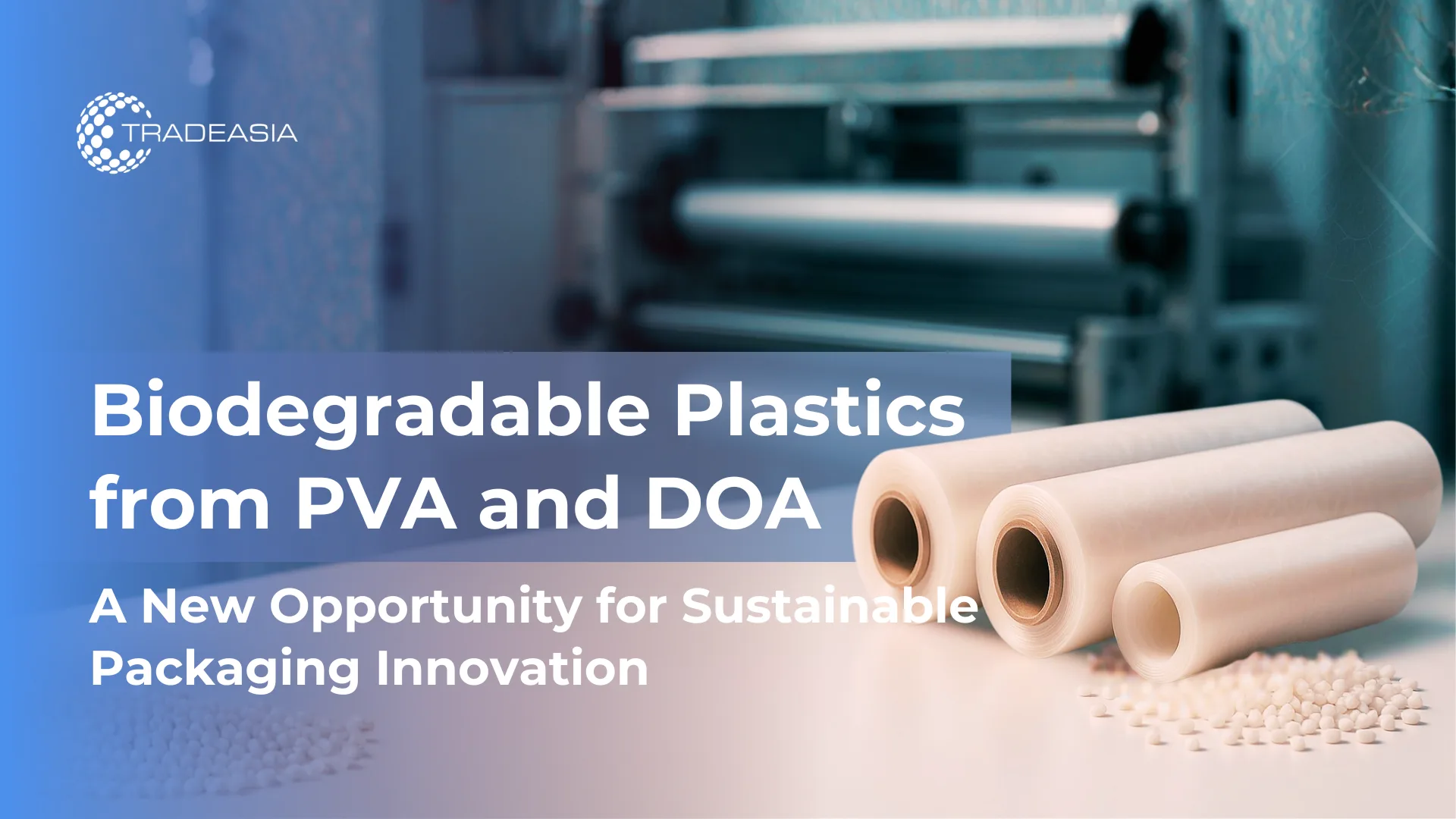
Biodegradable plastics are becoming essential in global packaging markets as industries shift toward sustainability, reduced carbon footprints, and circular material systems. Among the most promising biodegradable polymer systems are blends of Polyvinyl Alcohol (PVA) and Dioctyl Adipate (DOA). These two materials complement each other chemically and mechanically, producing films and packaging materials that are water-soluble, flexible, strong, and environmentally responsible. As market demand increases, studies published in ScienceDirect emphasize the rising adoption of biodegradable polymers due to regulatory restrictions and consumer preferences (ScienceDirect – Biodegradable Film Packaging Research).
PVA is a well-known biodegradable polymer with excellent film-forming capabilities, making it ideal for applications requiring strength and transparency. Its compatibility with various plasticizers makes it highly adaptable to numerous packaging formats. DOA, on the other hand, is a premium plasticizer widely used in the polymer industry to increase flexibility and low-temperature performance. When combined, PVA and DOA form a highly efficient biodegradable plastic system.
Industry research from ScienceDirect shows that the global biodegradable plastic market is expanding rapidly due to rising environmental regulations and consumer expectations. Blends like PVA–DOA are particularly attractive because they deliver performance similar to conventional plastics without the associated environmental burden. Their biodegradability profile aligns with international standards for compostable materials.
2. Understanding Biodegradable Plastics and the PVA–DOA Synergy
Biodegradable plastics are typically polymers capable of breaking down under natural environmental conditions through microbial activity, water dissolution, or enzymatic processes. PVA is unique among polymers because it dissolves in water and biodegrades rapidly in aerobic environments, making it suitable for applications where environmental disposal or compostability is necessary. DOA enhances this biodegradation by improving molecular mobility and reducing crystallinity, allowing microorganisms easier access to polymer chains.
Scientific publications from Wiley Online Library highlight that plasticizers like DOA significantly influence biodegradation rates by increasing polymer chain flexibility. DOA’s compatibility with PVA makes it ideal for biodegradable packaging where both mechanical performance and decomposition are required. This synergy results in packaging materials that maintain durability during use while offering quick breakdown post-disposal.
Another important advantage is that PVA–DOA blends are safer and more environmentally friendly compared to traditional PVC or PE plasticizers that may release harmful emissions. DOA is known for its low toxicity and excellent performance in biodegradable polymer formulations. For manufacturers targeting eco-friendly certifications, this combination provides a major advantage in product portfolio differentiation.
PVA materials suitable for biodegradable films can be sourced through Tradeasia’s reliable global supply channels:
3. Why PVA Is a Leading Material for Sustainable Packaging
Polyvinyl Alcohol is widely recognized for its excellent biodegradability, film clarity, and mechanical strength. Research from SpringerLink highlights that PVA undergoes rapid mineralization in soil, making it an exceptional candidate for eco-friendly packaging systems (Springer – Biodegradation of Polyvinyl Alcohol). This supports its adoption in water-soluble bags, agricultural films, detergent capsules, and pharmaceutical packaging.
PVA also offers excellent mechanical properties, including tensile strength, clarity, and gas-barrier performance. These properties allow it to replace traditional plastics in many high-performance applications. Its adaptability to coating, lamination, and extrusion processes makes it ideal for packaging manufacturers seeking sustainable alternatives without sacrificing product integrity.
Furthermore, PVA blends well with a variety of plasticizers, including DOA, to increase flexibility and softness. This makes it possible to produce biodegradable films with controlled dissolution rates, tailored mechanical strength, and improved handling characteristics. These qualities are essential for packaging solutions that require durability during transportation but biodegradability after disposal.
4. The Role of DOA in Enhancing Flexibility and Biodegradability
DOA is a widely used plasticizer known for its low-temperature flexibility, non-toxicity, and excellent compatibility with polymer matrices. In PVA-based biodegradable plastics, DOA lowers the polymer’s glass transition temperature, improving flexibility and elongation. This is essential for packaging applications requiring softness, foldability, and mechanical stability. External research from ScienceDirect confirms that plasticizers like DOA significantly improve polymer mobility, resulting in superior performance.
Another key benefit of DOA is its ability to reduce crystallinity in PVA films. This enhances water permeability and accelerates biodegradation, making DOA-plasticized PVA ideal for short-life packaging, agricultural films, and water-soluble bags. Manufacturers gain the advantage of controlled shelf life, improved compostability, and enhanced environmental compliance.
DOA also improves processability during extrusion and blow molding by reducing melt viscosity. This results in smoother, more uniform film formation with fewer defects. Packaging converters benefit from improved machine throughput and reduced energy costs due to lower processing temperatures.
To support plasticizer sourcing for biodegradable applications, Plastradeasia offers DOA and alternative plasticizers, including DOTP and DOP:
5. Industrial Applications of PVA–DOA Biodegradable Plastics
Biodegradable plastics made from PVA and DOA are increasingly used in flexible packaging, especially for products requiring temporary use and environmentally friendly disposal. Applications include water-soluble laundry bags, detergent capsules, agricultural seed tapes, and food packaging wraps. The PVA–DOA blend provides durability during use while ensuring rapid breakdown under natural conditions.
The agricultural sector benefits significantly from PVA–DOA biodegradable films used in mulch applications. These films enhance soil temperature, reduce weed growth, and degrade naturally after the crop cycle, eliminating the need for removal and reducing agricultural waste. Their eco-friendly profile supports sustainable farming initiatives worldwide.
Pharmaceutical and medical packaging also rely on PVA–DOA formulations for capsule coatings, soluble pouches, and sterilizable packaging. The biodegradability ensures that waste generated from hospitals and clinics can be processed safely with reduced environmental impact. Furthermore, the mechanical stability provided by DOA ensures secure handling during manufacturing and distribution.
Manufacturers seeking technical documents, data sheets, or product application support can access Plastradeasia’s Download Center.
6. Commercial Opportunities for Sustainable Packaging Manufacturers
The global demand for biodegradable packaging continues to rise, driven by regulatory pressure and consumer demand for eco-friendly products. According to Wiley and Elsevier, PVA-based biodegradable plastics represent one of the fastest-growing segments within sustainable materials due to their performance and environmental benefits (Wiley – Biodegradable Packaging Materials; Elsevier – Sustainable Polymer Markets).
Demand for biodegradable films is projected to grow extensively due to rising consumer awareness and pressure on brands to adopt greener solutions. PVA–DOA blends offer manufacturers a commercially viable alternative to conventional plastics, allowing them to maintain product performance while achieving sustainability targets. This creates an opportunity to develop new product lines, expand market reach, and enhance brand positioning.
Another opportunity lies in exporting biodegradable plastic products to markets with strict environmental regulations, such as Europe, North America, and developed Asian economies. PVA–DOA materials fit the sustainability criteria required in these regions, making them attractive for international buyers.
Manufacturers with sourcing or formulation questions can reach out to Plastradeasia’s commercial team for consultation and supply support: Contact us today!
7. Conclusion
Biodegradable plastics made from PVA and DOA offer strong potential for sustainable packaging applications across multiple industries. Their combination of strength, flexibility, safety, and environmental friendliness makes them an ideal solution for manufacturers seeking to meet rising consumer and regulatory demands. PVA provides biodegradability and film integrity, while DOA enhances mechanical performance and controlled decomposition—resulting in high-quality biodegradable materials suitable for modern packaging.
Companies looking to source PVA for biodegradable plastics can explore Chemtradeasia’s range of polyvinyl alcohol grades:
Meanwhile, manufacturers seeking reliable DOA chemical supplier options can access Plastradeasia’s product selections:
Technical details, application guidance, and procurement assistance are available through Plastradeasia’s Download Center and Contact Page:
With expertise in biodegradable polymers and global supply networks, Plastradeasia and Chemtradeasia remain trusted partners for manufacturers looking to innovate in the sustainable packaging industry.
Leave a Comment